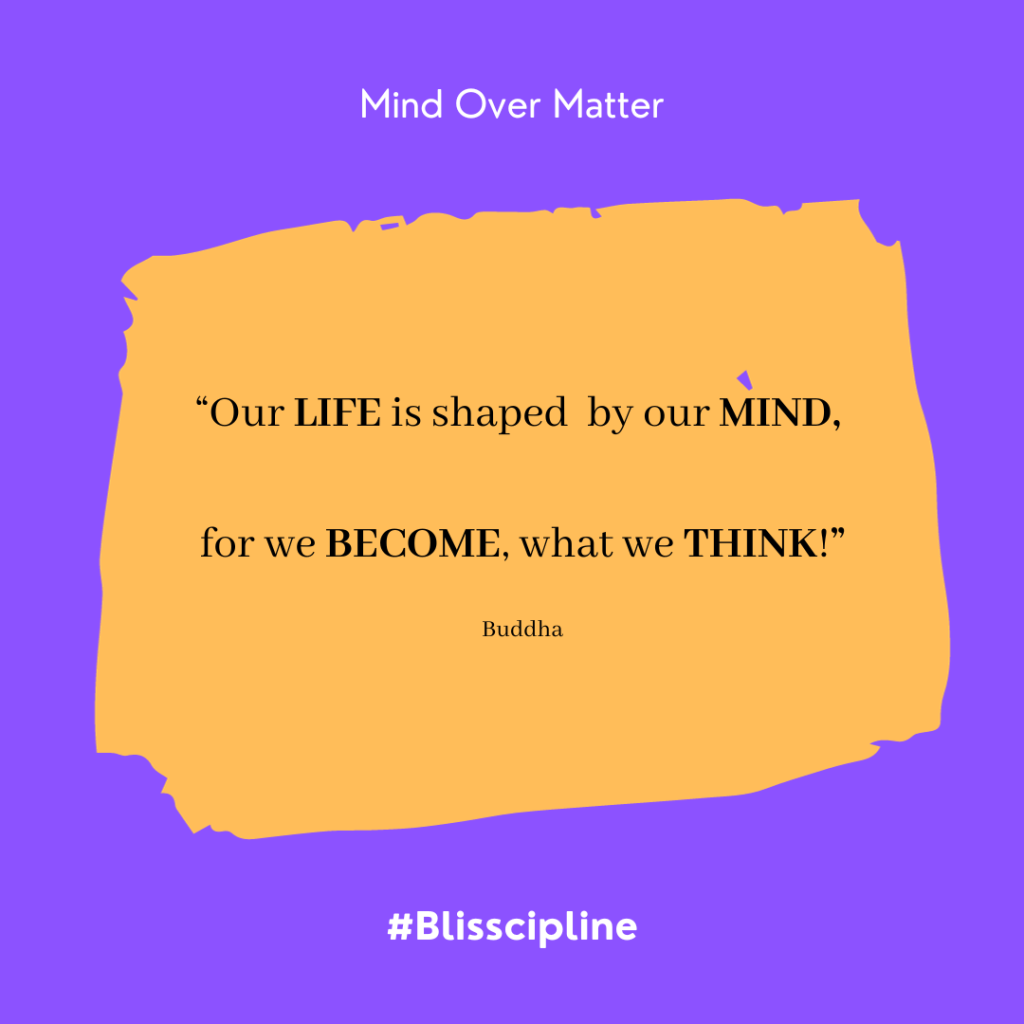
Positive Mindset as a Business Tool!

Return on Investment Part 5 – Happiness Training

We have 90000 thoughts a day, 60000 are repetitive

Thoughts are not facts but Thoughts become Things

What are your dominant regular thoughts in relation to your work, career and/or business?

Are they helpful or are they a hindrance?

As humans we tend to have a negative bias towards our situation. Moaning and focusing on what is going wrong rather than dedicating our precious time and energy on celebrating all the good in our lives

We can waste time concentrating on our weaknesses and perceived areas for improvement, rather than big up and work on our strengths

Henry Ford nailed it with his quote “If you think you can you can, and if you think you can’t, you probably can’t”! 

A healthy mind is as important as a healthy body

Your perspective also has a very powerful influence on your life, happiness and outcomes. We also tend to make up stories if we do not have all the facts!

Before I embedded my #Blisscipline toolkit into my life my stories would all have a negative slant and I could get quite angry making up content about my life i.e the dialogue within future meetings with my boss/customers

Being a Leader/business founder can be a lonely place at times, with a huge responsibility seemingly laying at your feet. You need to use every trick in the book to make sure you are not only healthy in body, but also in mind. How many of you live in your head with a chaotic monkey mind?

Fearful?

Scared?

and surrounded by chaos and lack of clarity?

In my experience being kind to your mind with a proven formula/toolkit/strategy leads not only to more success, calm, clarity and better decision making and outcomes, but a healthy confident body too!

Training your mind, using the benefits of the power of positive psychology

Through my own personal experience and client work, we can waste a lot of valuable time by moaning/worrying and going around in circles. Believing we are busy and productive but are so busy we are really just running around like headless chickens and getting nowhere fast.

We all have encountered those “mood hoovers” who drain so much time and energy. something businesses, these days, just can not afford to entertain

SO let’s decide to cultivate a success mindset!

Let’s focus on what’s going well and what is in our control!

Let’s ensure our glasses are full and our life is rewarding!

and as a result we get that all important clarity

Once your mindset changes then everything on the outside will change!

Do you know how great a changed mindset can influence your life as well as your experiences?

You can not change your life until you have changed your mindset!

In fact there is nothing as powerful as a changed mindset. You can change everything around you. However, if you do not change your mindset the same experiences will keep repeating. Your mindset will continually influence your actions as well as your experiences in life.

Moreover, this is something I have come to learn MINDSET IS EVERYTHING!

That is how my business was formed as it is all literally

Study every great and successful person that has ever lived. The key factor they recognised, as being crucial, to their success was changing their mindset. Understanding the power of your mindset and how it connects to what you get out of life paves a way to literally transform your life!

It is all about mindset from the moment you wake up, to the moment you rest your head at night! Everything is up to you, your emotions, your thoughts, your perceptions, your reactions. Every Moment!

Individuals, leaders and teams, who believe their talents can be developed (through hard work, good strategies, and input from others) have a growth mindset. They tend to achieve more than those with fixed mindsets (those who believe their talents are innate gifts).

Pulse (Linked In, March 2023) concludes – “in the fast-paced world of business …fostering a positive, entrepreneurial mindset can be a powerful tool in achieving success! By focusing on solutions, practising gratitude, surrounding yourself with positivity, practising self-care, and celebrating your successes, you can approach challenges with a clear and optimistic mindset”

Supporting Evidence

“38% of entrepreneurs credit their success to self-discipline, and a growth mindset can help you stick to your guns while reaching for your goals. You learn to accept constructive criticism, embrace failures as opportunities, and challenge yourself to grow everyday”. https://blog.hubspot.com/the-hustle/growth-vs-fixed-mindset

“Positive thinking is a powerful process that can improve your professional life in a variety of ways. Thinking positively at work may help you stay motivated and work better with others. In this article, we discuss the professional advantages of positive thinking, how to start thinking more positively and tips to maintain a positive outlook” https://www.indeed.com/career-advice/career-development/positive-thinking-in-your-career

“Leadership is something that is almost completely dependent on positive thinking. After all, we’ve all worked with negativity and that negativity rarely results in greatness. A good leader can use their natural positivity to influence those around them. By this, we don’t mean constant cheery sunshine and smiles, that can become grating quickly, but a general faith in your team. Some encouraging words and rewards when employees hit their targets are exactly the positivity a work environment needs” https://www.healthassured.org/blog/benefits-of-positive-thinking/

Benefits

● Feeling more comfortable accepting feedback
● Reduced staff turnover – resource savings: time and money
● Fostering innovation and creativity
● Less time moaning and more time for solving problems
● Increase in productivity
● Winning success mindset
● Increased business acumen
● Happy, healthy and productive non-toxic culture
● Subsequent positive impact around customer experience

Happiness Training Methods

● Implementation of 5 Steps to Happiness #Blisscipline Toolkit
● Inspirational Talks and Keynote Speaking (in house CPD and/or away days)
● Positivity Power Hours
● Compassionate Leadership Training Packages
● Group Happiness Workshops and Webinars
● Individual Success and Wellbeing Mindset Coaching and Mentoring

A simple yet powerful first step, and to test if you could work with me, would be to purchase a copy of my 5 Steps to Happiness #Blisscipline Toolkit

Are you interested but need more information? Then please do get in touch before you
make that all important decision around investment

Or are you in need of some help convincing the decision makers? Then let’s chat around
some conversation starters.

Mind Over Matter’s purpose is to assist others in cultivating a success mindset and experience the positive impacts of this #Blisscipline

The Importance of Having a Mentor!

Return on Investment Part 4 – Happiness Training

There is significant research showing that having a business mentor is one of the top tips from successful business owners and leaders.

Business mentoring is a relationship between you and someone with experience who is willing to act as guide by listening, and then supporting by advising, guiding, signposting, and/or connecting

Mentoring is directional. 

Mentoring is a relationship between two people with the goal of professional and personal development. The “mentor” is usually an experienced individual who shares knowledge, experience, and advice with a less experienced person, or “mentee.” Mentors become trusted advisers and role models – people who have “been there” and “done that.”

They support and encourage their mentees by offering suggestions and knowledge, both general and specific. The goal is to help mentees improve their skills and, hopefully, advance their careers, if that is relevant, but ultimately to find balance, lead a more rewarding life, reach their full potential and find more happiness and fulfillment all round. Eradicating the stress, worries and no doubt sleepless nights.

The relationship should be based on mutual trust and respect, and it typically offers personal and professional advantages for both parties.

Coaches, trainers, and consultants can all help you learn and grow personally and/or professionally. Mentoring is a unique combination of all of these.

Listening but also to stimulate whilst challenging your thinking. Sourcing solutions to business challenges quicker than by yourself

So make sure you look to work with some with both expansive personal and professional experience and backed up with credible qualifications. Do not forget it is not only good to talk but also very good to be heard!

Outsourcing mentoring is now very popular with organisations. Many internal mentors just do not have the time to dedicate fully to a mentoring scheme. Also utilising someone with experience can bring more objectivity to the process. Someone who can zoom in onto the situation and cut through the internal noise

Many people are investing in personal trainers, think of a mentor as a personal trainer for your mind!

When I started my business, and still nowadays, I know just how much I benefit from having someone objective to utilise as a safe sounding-board, facilitator, advisor, guide, connector or to just for someone to concentrate and listen to me.

A proven strategy to get my muddled, anxious thoughts and worries to disappear and to gain that all important clarity.

Statistics.

“Half of the workers say they have a mentor to help them at work, and the people who did were more likely to be happy with their jobs. In fact, 91% of employees with a mentor were happy with their jobs, and over 57% were “very satisfied”.

“Employees involved in a mentorship plan were also more inclined to say they were well paid (79%), and they also were more likely to believe their contributions were valued and appreciated (89%).”

“Alternatively, more than 4 in 10 workers who said they didn’t have a mentor also said they had considered quitting their jobs in the last three months. Only 25% of employees with mentors had considered leaving their role.” CNBC Happiness Survey

“21% of Gen Z respondents want their leaders to have mentor abilities” Robert Half

“76% of people consider a mentor relationship to be important to growth, but only 37% of people are currently using a mentor.” Olivet Nazarene University

“Workplace mentorship could help women overcome disadvantages preventing them from accessing leadership roles.” Sex Roles: A Journal of Research

“Workplace mentoring can improve minority representation levels by up to 24%.” Cornell University

https://www.soocial.com/workplace-mentoring-statistics/

Quotes.

“Mentors are an invaluable asset for entrepreneurs, offering a unique perspective and invaluable experience. They can act as your map and compass on your path to success, helping you to avoid the same mistakes they have made in the past. But is investing in a business mentor worth it? The answer is a resounding yes. Mentoring offers benefits to both the mentor and the mentee, beyond the money they can contribute.” https://www.entrepreneurship.support/are-business-mentors-worth-it

“A mentoring partnership can be rewarding to both people, personally and professionally. It’s an opportunity to develop communication skills, expand your viewpoints, and consider new ways of approaching situations”. http://www.Mindtools.com – 2023

“Mentoring has been a constant really. We always knew we were by no means expert, so straightaway we reached out to anyone with more experience than us and talked through our problems and we have kept on doing that.” James Routledge – Matchchat Founder https://www.theguardian.com/small-business-network/2014/jul/16/mentoring-success-small-business-owners

“Entrepreneurs know how exciting it is to bring a new idea to life. Yet, however great the idea, they may not know how to develop it into a working business model to generate revenue. That’s where a mentor comes in. Over the years, we’ve had several mentors who have been an integral part of our success and taught us invaluable lessons that helped us avoid poor business decisions.” https://startupnation.com/grow-your-business/mentor-essential-business-owners/

Benefits

  • More time focusing on sourcing solutions, rather than problems
  • Two minds are definitely better than just one muddled one
  • Clarity from reflection
  • Stimulating whilst challenging thinking of individuals and teams
  • Problems are solved effectively and efficiently
  • Resources are fully utilised, rather than wasted
  • Maximising operational effectiveness
  • Valued, less stressed, motivated and loyal workforce
  • Fostering innovation and creativity
  • Increase in productivity
  • Employer of Choice – the positive PR of this as well as competitive advantage


Happiness Training Methods

● Mentoring Packages
● Compassionate Leadership Training Packages
● Positivity Power Hours
● Implementation of 5 Steps to Happiness #Blisscipline toolkit
● Group Workshops and Webinars

A simple yet powerful first step, and to test if you could work with me, would be to purchase a copy of my 5 Steps to Happiness #Blisscipline Toolkit

Are you interested but need more information? Then please do get in touch before you
make that all important decision around investment

Or are you in need of some help convincing the decision makers? Then let’s chat around
some conversation starters.

Mind Over Matter’s purpose is to assist others in cultivating a success mindset and experience the positive impacts of this #Blisscipline

Benefits of Mission Led Leadership Style!

Return on Investment Part 3 – Happiness Training

What do we do and why does it matter?”  When Justin Featherstone MC FRGS FRAI, asked me that question during one of my Senior Leadership MBA sessions… it literally transformed my life and justified my need to be aligned to the purpose of my organisation, alongside my passion and preference for my mission led leadership style

My subsequent assignment focused on the two following questions.  

1.       How can we as managers and leaders engage the organisations we lead in positive change?

2.       How can we ensure that they commit to a positive change agenda, and carry that through to yield a viable and sustainable result?

Cope et al (2018) states that change has become exponential, reinforcing the requirement for exploration into this topic. I was on a mission, and succeeded, in proving that a positive change agenda can be achieved by implementing an effective mission-led leadership style that influences behaviour to foster a positive culture, where change is embraced, and teams are effectively responsive to operating in a VUCA World. 

VOLATILE           UNCERTAIN           COMPLEX          AMBIGUOUS

It evidenced the concept of a mission-led leadership style whilst demonstrating that change is not only inevitable but also essential, alongside any challenges, and how leaders have a duty of care to assist with overcoming natural resistance to change. It also provided an explanation of a VUCA world, its impact, and why and how leaders should respond to this.

It concluded in showcasing how the mission-led leadership style concept could be implemented, to facilitate and embrace change within an organisation, during these VUCA times.

 In our faster moving, digital enabled organisations, we are discovering that once rewarded leadership styles such as command and control, are now outdated (Lyle, 2019). Suggesting that there is a need for a new way of leading.

According to Steenbarger, (2015, para 17) in mission-led leadership “Leaders are defined by WHAT they follow not who they follow or command”. He explains that it is an effective strategy of utilising inspiration to elicit perspiration. The new psychological analysis of Reicher et al., (2007) also argues that effective leaders are bound by a shared identity that can be used as an action blueprint. This suggests that leaders are more successful when they consider, and then utilise the organisation’s mission, as an inspirational tool. Teams can be inspired by leaders who share the same purpose. Once individuals understand the ‘Why Factor’ of the organisation and it energises them, there should be no need for manipulation (extrinsic rewards), but they should want to be part of your journey (Cope, 2018).

Hyslop (2017) proposes that effective organisations ensure that their missions have a purpose. He has no doubt this emulated from a servant leader and that a mission can be such a powerful tool if it is recognised as being worthy. He concludes that we need more mission-led leaders, who are sometimes referred to as servant leaders. Ross (2015) would also argue that leaders of organisations who fail to inspire their teams to align to the overarching purpose are sacrificing a golden opportunity.

Does the 21st Century call for a novel approach to leadership, whereby people are motivated and open to change, with a drive to do things because they matter and make a difference?  Intrinsic rewards such as mastery, purpose and autonomy can be great tools to gain effectual engagement, ethically influence teams and support a positive change agenda (Pink, 2015). Due to organisations having to evolve far more rapidly, leaders need to demonstrate even more flexibility, speed, trust, and cooperation. Essential elements to be embedded into their leadership styles (Lyle, 2019). Evidence that a consistent mission led leadership style can effectively navigate teams through these unprecedented times.

 Research shows that there are many advantages to fostering a mission-led approach and they include improved confidence for our organisation, an increase in trust which leads onto positive opportunities in strengthening innovation as well as being a sought-after employer of choice. Finally, and perhaps most importantly, for a plethora of reasons, significant improvement in employee engagement (Ross, 2015) which leads to higher performing teams.  This should allow you to achieve your goals in a positive culture, where change and innovation are embraced.

 It is important however to always consider any barriers related to proposing a leadership style. There appear to be three significant challenges relating to the mission-led leadership style.  One being that not all leaders understand the importance of mission-led leadership and how to implement, or even have any desire/capability.  Secondly it might not always be a purpose that is worthy of inspiring others or demonstrating shared value creation. Finally, humans do not naturally embrace change. To implement a positive change agenda, these barriers must now be explored further to identify means for overcoming them.

All employers should ensure the wellbeing of their internal customer is a priority.  Leaders are at the forefront of this duty of care (Witzel, 2018). Hyslop argues that “servant leaders who are passionate about mission are the most effective leaders and are people who are remembered for their integrity and impact on others” (2017, para 14). So, if it is essential for leaders to be responsible for their teams, this would indicate the mission-led approach can be a support mechanism?

Unfortunately, there are leaders who are self-centred and those that influence others in ways that are not always ethical (Witzel, 2018). It is very much worth noting that if everyone is out for themselves then society, itself, would fall apart.  Also, it might prove prudent to highlight to those more greed orientated individuals that if there is a streamlined process, where organisations create value for stakeholders, then the money will follow (Witzel, 2018).  The by-product of being ethical and such value creation being profit. All being achievable through implementing a mission-led leadership style that embraces change.

 To implement an effective mission led leadership style that inspires, and subsequently supports your teams through change and help them innovate, there should be a worthy mission around creating shared value rather than just a healthy profit. It is essential to not make aims and objectives all about money, profit, and the bottom line, but to motivate and inspires teams by emphasising the importance of connecting with a sense of shared purpose (The People Insight Org, 2022). A belief mirrored by Steenbarger (2015, para 14) by stating that “The challenge of mission-based management is to find that something important.” Although appearing repetitive, the widely discussed point reinforces the requirement for identifying what is meant by ‘important’ to support the success of this leadership model.

Does having a shared identity/mission that resonates bring about a sense of belonging and with it trust? Firms that are deemed trustworthy attract not only talent but individuals who share the organisation’s philosophy and goals (Witzel, 2018). Resulting in high performing teams, consistently innovating superior products/services, which in turn, leads to delighted customers. Such customers can generate a wealth of benefits for an organisation.

“In such circumstances demonstrating highly visible and caring leadership becomes even more important” (D’Auria et al., 2020, para 5). Again, this is the fundamental concept of mission-led leadership. 

If change and uncertainty are managed and communicated effectively then individuals will feel supported, trust more, face their fears, accept, and embrace change.  Mission-led leadership can provide response strategies, alongside building resilience and equipping them for any future change. The University of the People Org. (2022) evidence that one way in which to do this is by “knowing your why”. They argue that if your purpose is defined that this can diminish any fear of change. Once you understand and align to the why, then when making decisions or facing change, you can first check in that it is aligned to the why and then feel less fearful and embrace change.

Solution Framework

My desire to find solutions to support not only me but my team and our customers, and was born out of the exponential changes faced by my organisation, and ineffective leadership and lack of empathy being proven as having a causal impact.  

I am grateful that I found a solution, a blueprint for designing and developing a mission led leadership style approach throughout the organisation. It is also made it very apparent that I needed to make a change and find work that was aligned to my purpose and values 

  • Bespoke Mission Led Leadership  Blueprint 
  • Road Map for Implementing Mission-Led Approach
  • Checklist for Leaders 

This can be offered through Organisational Mission Led Leadership Training 

alongside 

1:1 Leadership Coaching and Mentoring 

all can be tailor made for your organisation. Do get in touch if want to discuss options  

Conclusion

My work explored the concept of the mission-led leadership style and the positive impacts if said challenges are to be overcome. The proposed action plan serves as a blueprint for demonstrating the means of overcoming these challenges, and guiding others to implement a mission-led approach.

Leaders are also humans, possessing a range of personality types, strengths, and values, and just like their teams they are prone to resisting change.  It is also paramount that they are inspired if they are going to lead others effectively and ethically through a positive change agenda.

Life does not standstill, it moves through change and remaining static is not an option. Therefore, change is inevitable, from a personal and professional perspective.

If businesses do not grow or diversify, then they will no doubt decline. 

This will have a detrimental impact on all stakeholders of a business.

Effective organisations, with longevity, have missions that matter (Witzel, 2018).

As Daisaku Ikeda is quoted, as Soka Gakka’s President (2021, October, para 3)

 “The key to leading a fulfilled life, free of regrets, is to dedicate ourselves to a cause, a goal that is larger than us.”

Are you interested but need more information? Then please do get in touch before you make that all important decision around investment 

Or are you in need of some help convincing the decision makers? Then let’s chat around some conversation starters.

Benefits

  • An organisation fit for purpose, within the VUCA times
  • A clear Vision that is articulated
  • Less confusion and more clarity 
  • Employer of Choice – the positive PR of this
  • Reduced Staff Turnover – resource savings: time and money 
  • Fostering Innovation and Creativity 
  • Increase in Productivity and Performance and ultimately the bottom line
  • Morally the right thing to do 
  • Improved loyalty and trust in leadership 
  • Happy, healthy and productive non-toxic culture 
  • Subsequent positive impact around customer experience 

Happiness Training Methods

  • Implementation of 5 Steps to Happiness #Blisscipline Toolkit 
  • Inspirational Talks
  • Positivity Power Hours
  • Compassionate Leadership Training Packages
  • Group Happiness Workshops and Webinars
  • Individual Success and Wellbeing Mindset Coaching and Mentoring 

If you want to know more, or need some support, than please do get in touch.

Mind Over Matter’s purpose is to assist others in cultivating a success mindset and experience the positive impacts of this #Blisscipline                                            

Fostering People First Cultures

Return on Investment Part 2 – Happiness Training

Why Happy and Healthy Employees and cultivating a non-toxic environment is the most successful business model going… as well as the most ethical.


Employees Don’t Quit Their Jobs, They Quit Their Bosses! Bad bosses do not really value their greatest asset – their internal customer! This will lead to a toxic work environment and impact on morale, recruitment, retention and productivity. A positive healthy work culture encourages employee friendships, improves personal well-being and ultimately benefits your bottom line.


Recognising your employees can promote and foster a healthy workplace culture. Ensuring they feel more motivated, engaged and connected. It can truly unlock the true potential of your business. Employees who feel noticed, valued, and appreciated, by their employees, are more loyal and productive. This expands over to positive customer experience too!

Statistics

“Becoming a better employer isn’t solely about the salaries you offer but also other factors such as company culture, career development, employee experience, engagement with staff and leadership styles” – Indeed – 19th May 2023


“People taking sick days because of work-related stress or burnout is costing the UK economy £28 billion a year, according to new research which highlights the financial toll of poor mental wellbeing”. Anna Wise, Evening Standard Business News – 29 Mar 2023


“Bad bosses don’t really value their employees, and the employees can feel it. In turn, they stop making their best effort. When you don’t feel appreciated and valued, you are less likely to bring your best self to work, and you are less likely to flourish on your projects” – www.forbes.com 21st September 2019


“The result? Higher levels of job satisfaction among employees, greater talent acquisition, and improved employee retention. The business sees benefits, too, primarily in increased productivity, employee engagement, and improved collaboration” – https://www.workhuman.com/blog/people-first-culture/ 25th Ocotber 2022

Benefits

● Decreased Absenteeism and Improved Employee Engagement
● Understanding and prevention around Stress and Burnout
● Employer of Choice – the positive PR of this
● Reduced Staff Turnover – resource savings: time and money
● Fostering Innovation and Creativity
● Increase in Productivity and Performance
● Morally the right thing to do
● Improved loyalty and trust in leadership
● Happy, healthy and productive non-toxic culture
● Subsequent positive impact around customer experience
● Reduced marketing costs.

Happiness Training Methods

● Implementation of 5 Steps to Happiness #Blisscipline Toolkit
● Inspirational Talks
● Positivity Power Hours
● Compassionate Leadership Training Packages
● Group Happiness Workshops and Webinars
● Individual Success and Wellbeing Mindset Coaching and Mentoring

If you want to know more, or need some support, than please do get in touch.

Or are you in need of some help convincing the decision makers? Then let’s chat around
some conversation starters.

Mind Over Matter’s purpose is to assist others in cultivating a success mindset and experience the positive impacts of this #Blisscipline

Happy Employees as a Business Model

Return on Investment Part 1 – Happiness Training

Research shows that those organisations who invest in the happiness of their employees have far more engaged employees. Employees who are engaged are also more productive and want to attend work, so absenteeism is decreased. Happier employees tend to get less sick. So happier and healthier employees can lead to a far more positive work culture!


Positive work cultures can also lead to improved customer satisfaction! Engaged
employees who are therefore happier, subsequently typically provide better service to their fellow colleagues but also external customers. This is a result of being more happy, positive and proactive.

Statistics

“Our brains function significantly better in a positive mood than when they are in negative, neutral or stressed. Happiness leads to increased cognitive function, improved problem-solving ability, increased memory and retention, higher accuracy and more creativity” www.executivesupportmagazine.com – 25th June 2018.


“Happy Employees are productive employees” Forbes published the results from one study that revealed happy employees are as much as 20% more productive in the workplace than unhappy ones. www.wellsteps.com – 17 Feb 2023


“Happy employees are more likely to be loyal to their company. They are less likely to leave their company for a new job. Pretty good reasons, to say the least. This can lead to increased innovation and productivity” www.linkedin.com – pulse – 23 June 2023.


“Losing an employee costs a company on average 1.5 to 2 times the employee’s salary. The good news is that happy employees are less likely to leave their jobs. As happiness increases, the number of employees who leave their oganisation typically decreases”. www.ringcentral.com – 29 March 2022

Benefits

● Improved attendance
● Understanding and prevention around stress and burnout
● Employer of Choice – the positive PR of this as well as competitive advantage
● Reduced staff turnover – resource savings: time and money
● Fostering Innovation and Creativity
● Less time moaning and more time for solving problems
● Increase in productivity
● Morally the right thing to do
● Deadlines are met
● Improved loyalty
● Happy, healthy and productive non-toxic culture
● Subsequent positive impact around customer experience
● Reduced marketing costs.

Happiness Training Methods

● Implementation of 5 Steps to Happiness #Blisscipline Toolkit
● Inspirational Talks
● Positivity Power Hours
● Compassionate Leadership Training Packages
● Group Happiness Workshops and Webinars
● Individual Success and Wellbeing Mindset Coaching and Mentoring


Are you interested but need more information? Then please do get in touch before you
make that all important decision around investment


Or are you in need of some help convincing the decision makers? Then let’s chat around
some conversation starters.

Mind Over Matter’s purpose is to assist others in cultivating a success mindset and experience the positive impacts of this #Blisscipline

Introducing my Return on Investment – Happiness Training Series

Have you read about the Power Of Positivity and how embedding a leadership toolkit, based on this framework into your organisation, and subsequently fostering a “People First Culture”, is the most successful business model going?

Do you need to convince your Leadership Team to invest in the happiness and health of your employees?

Are you part of the Leadership team who wants to know more before making an informed decision?

Then you have come to the right place, over the next 6 – 8 weeks I will be producing a series of blog posts that should help support you in your mission

The Power of Positive Psychology

The Secret to a Happy Life

If you have never heard of positive psychology, then look no further and you are in for a treat…

Discovering the Power of Positive Psychology literally transformed my life!

One of my greatest wishes is that our success ranking was measured on our Happiness levels and what we give back to society. 

Many strive for financial and material success, but research would show that this does not make the recipient happy and fulfilled. Money is useful but wealth does not necessarily lead to inner happiness and fulfilment!

There are many stories about people who have faced serious disabilities and atrocities (think Katie, Piper, Billy Monger, Stevie Wonder, Christopher Reeve or Stephen Hawking) who are very happy and accomplished in their lives. Clearly circumstances don’t make us unhappy.

So what does make us happy then, I hear you ask?  Personally, the answer lies in the power of positive psychology, or your perspective on life.

 A healthy mind is as important as a healthy body!                  

  •  I spent many years watering the weeds instead of the seeds, worrying about things that never happened
  •  Focusing on what I didn’t want rather than what I did want
  •  Berating myself for what was missing rather than all that was present
  •  Allowing limiting beliefs to rule my life
  •  Living with debilitating stress related anxiety
  •  Just not feeling good enough and living in fear of regret
  •  Focusing on the past
  •  Staying in my comfort zone and just existing rather than living life to the full
  •  Allowing negative self-talk to ruin my life and experiences.

Mind Over Matter and subsequently #Blisscipline were born out of wanting to ensure my mind was positively impacting my life rather than draining my energy and discovering the benefits and power of positive psychology.

SO WHAT IS POSITIVE PSYCHOLOGY, I HEAR YOU ASK?

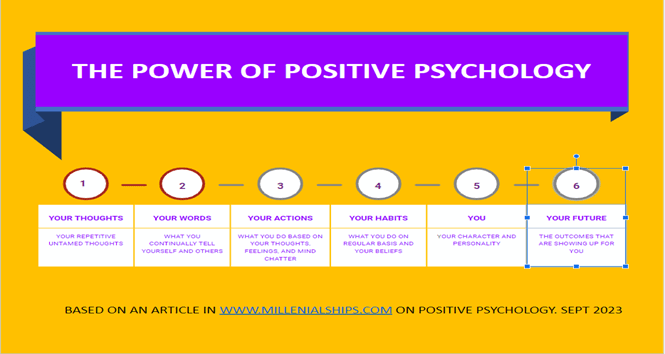
The definition of positive psychology is: The study of what makes life worth living. According to www.millenialships.com (September 2023). Most of us are learning or appreciating that it is not the more  trivial things in life such as recognition, achievements, celebrity status or wealth. So expanding our time and energy focusing on such elements of our life (or no doub the lack) is like being sad that you dropped your ice cream cone, when you have a full bucket of ice cream right beside you.

Don’t focus and be sad about what you perceive that you dont have, work on being positive, grateful and happy about the things you do have.

The positive psychology cycle looks like this: Thoughts become our words, words become our actions, actions become our habits, habits define US,  and ultimately dictates our future, and how we view our life and what we receive and how we feel!

So if our thoughts and words result in our outcomes in life then please can we make our thoughts as awesome as possible

So let’s stop sitting around moaning about how our life looks and feels, take responsibility, where we have control, and make a huge difference.  Our ultimate GOAL to make normal life more fulfilling and reach the full potential and happiness levels we SO deserve!

Simply put, but oh so powerful, it  means looking at what is already going well in your life, and being grateful for what is working.

The way to develop a healthy mind is with positive thoughts, just like a healthy body needs us to ensure it receives the correct nutrients backed up by activity.

It takes work but that is why I have produced my #Blisscipline toolkit! To ensure it becomes part of every day life rather than another boring chore!

Some people are just far more naturally happier or positive, but like me this can be learnt, with some practice and desire. If you work out how to think (your mind is muscle too!) it will get stronger and develop habits of happy, healthy and positive thinking (neural pathways) If we are going to live in our heads, most of the time, then we might as well make it a happy, healthy and as comfortable place as possible, should we not?

What are you good at?

What are your strengths?          

What energises you?

What makes you happy?

Positive Psychology forces us to focus on these. Whatever you are good at, love, and enjoy, endeavour to spend your time doing those things.

If a friend told you that you looked lovely focus on that rather than the friend who has not responded to a message

If your leader told you that they were pleased with your performance today, then focus (and bank it in your evidence bank) on that rather than instead of the fact that you think you might have  said something stupid to your co-worker earlier.

It is all about focusing on the areas where YOU are in control!  All of us have aspects of our lives that we cannot control. For example our height, frame, family, past, IQ  – these are all things that are out of our control.  Therefore these same things should be out of our thoughts.

Dwelling on things that we cannot change is a waste of our precious energy because… there are so many things we CAN change.

Our attitude. Our tribe. How we communicate. Who we do not interact with

You control your life. You control your thoughts. It’s really empowering when you totally get this!

It is also important to acknowledge that Well being is not about ALWAYS BEING HAPPY

Embracing positive psychology is the key to a happy life but it doesn’t mean we’re happy all the time. Sadness is a crucial part of our lives and we need to feel sadness, we shouldn’t push it down.

But well-being is about looking at that sadness as temporary. and gaining a toolkit of strength and resilience to deal with the sadder times in life.

If a plasterer broke his wrist.  The answer is not to keep on working and cover up the pain. It is to accept the set back of the broken wrist, and know and remember that this is a temporary setback.  The plasterer is still fit and healthy otherwise, they are simply undergoing a period, frustrating yes, of temporary struggle and difficulty. .

#BLISSCIPLINE PRACTiCe maKES PERFECT

By accepting that we might be imperfectly perfect is a good starting point, and here is some final food for thought!

We have all no doubt come across someone, say a child at school, who was perhaps better at say sport or reading than us. Someone who shone and was better than all the other children. Perhaps that was you in some circumstances! .

Just because they are better, doesn’t mean the other children should not participate in sport or try harder at reading or a particular sport. It’s good for their health, their bodies, their mind and their soul! As well as their future.

And if one of the other kids practices really hard and devotes a lot of time learning how to improve at either sport or reading.  They might just catch up to the child who is naturally talented, and has already put their practice in or perhaps just did not have to.  They might indeed even become the best!  Think of all the things that you thought you could not do and now you do with ease or a bit more concentration!

For the majority of us thinking and feeling positively will not, at the start,  come naturally to you, BUT I can promise that it doesn’t mean you can’t learn how to do it. Like me, You can learn it and you will be glad you did. Like Henry Ford so famously quoted If you think you can, you can, and if you think you can’t, you probably can’t!

Benefits of Embracing the Power of Positive Psychology.

  • Minimising negative self talk
  • Turning your inner critic into your inner coach
  • Taming your thoughts
  • Reframing your limiting beliefs
  • Opening your heart
  • Discovering and following your purpose
  • Having better outcomes in life
  • Dreams that come true
  • Having a toolkit for facing the challenges life may throw at us
  • Becoming far more happier, healthier, and fulfilled.

If you want to know more, or need some support, than please do get in touch.

Mind Over Matter’s purpose is to assist others in cultivating a success mindset and experience the positive impacts of this #Blisscipline